Campus:
NES International School Mumbai,
Opposite Sardar Pratap Singh Garden,
Agrawal Road, Near Swapna Nagari,
Mulund West, Mumbai 400082.
Opposite Sardar Pratap Singh Garden,
Agrawal Road, Near Swapna Nagari,
Mulund West, Mumbai 400082.
See on Map
Yes, IB can be tougher than ICSE for some students, but not necessarily because there is more to study. IB can feel more challenging because students are expected to think independently, apply concepts, conduct research, solve problems and communicate their ideas instead of mainly focusing on remembering information.
ICSE also has a rigorous and comprehensive academic curriculum, but its learning approach is generally more structured and subject-focused.
So, when parents ask “Is IB harder than ICSE?”, the better answer is that IB can be more demanding in terms of independent thinking, application and continuous learning, while ICSE can feel more demanding in terms of structured academic study and subject preparation.
The level of difficulty ultimately depends on the student's learning style, academic strengths and ability to adapt to the teaching and assessment approach.
If you're comparing an IB school in Mumbai with an ICSE school, understanding these differences can help you choose the right learning environment for your child.
Imagine two students learning about climate change.
One student is asked to understand the causes, effects and solutions through a structured curriculum. Another is encouraged to investigate a question, research different perspectives, analyse information, connect it with real-world situations and present their conclusions.
Both students are learning. But the second approach requires the student to question, investigate, analyse and communicate and this is where IB can feel more challenging.
Here are some reasons why parents often perceive IB as tougher than ICSE:
IB does not simply ask students to remember information. They are encouraged to understand concepts and apply their knowledge.
Students are encouraged to form opinions, ask questions, research and support their conclusions.
Depending on the IB programme and subject, students may engage in projects, investigations, presentations and other forms of assessment.
IB learning encourages students to become active participants. They gradually take greater responsibility for managing their learning.
Depending on the IB programme, assessment can include examinations as well as coursework, projects, investigations, presentations and other tasks.
For parents who are more familiar with an examination-focused approach, this broader style of assessment may initially seem demanding.
However, the challenge is not simply about workload. IB develops a different kind of academic discipline by asking students to understand, apply and communicate what they learn.
For parents in India, the choice between IB and ICSE should not be based only on which board appears easier or harder.
Consider how each curriculum approaches:
The right choice depends largely on what type of learning environment helps your child perform and grow with confidence.
There is no single curriculum that is better for every child.
A student who enjoys structured learning, a defined syllabus and conventional academic preparation may find ICSE familiar and comfortable.
A student who enjoys asking questions, exploring topics, connecting ideas, conducting research and applying knowledge may enjoy an IB learning environment.
Therefore, instead of asking only “Which board is better?”, parents should ask:
“Which learning approach is better suited to my child?”
The level of difficulty depends on the student, the programme and the subjects being studied.
A student moving from a structured academic environment to IB may initially find the greater emphasis on research, application, independent thinking and varied assessment challenging.
However, students can adapt to the approach with appropriate academic guidance, time management and regular support.
It is therefore more accurate to say that IB and ICSE challenge students in different ways, even though IB can feel tougher for students who are less accustomed to independent and inquiry-based learning.
Yes. Students from ICSE and other recognised curricula can transition to IB.
However, the transition may require an adjustment because IB places considerable emphasis on inquiry, conceptual understanding, independent learning and application.
Students may need time to become comfortable with:
With the right support, students can gradually adapt to the IB approach.
Both IB and ICSE have recognition beyond India. However, the IB framework has a strong international orientation and its programmes are widely recognised by universities globally.
Recognition and admission requirements can vary depending on the university, country and course. Parents should always check the specific requirements of the universities and programmes their child may be interested in.
Yes, IB can feel tougher than ICSE for some students, particularly because of its emphasis on independent thinking, inquiry, research, application and varied assessment.
ICSE provides a structured and comprehensive academic framework with strong subject-focused learning.
The important question is therefore not simply:
“Which board is tougher?”
It is:
“Which learning approach will help my child learn effectively & develop the skills they need for the future?”
The IB vs ICSE comparison does not have to be about finding the easier or tougher board.
IB may challenge students through inquiry, research, application, reflection and independent thinking. ICSE offers a structured and comprehensive academic approach with strong subject knowledge.
The right choice depends on the individual student, their learning style, academic goals, interests and future plans.
At NES International School Mumbai, learning goes beyond academic excellence. The school focuses on nurturing curiosity, creativity and character, while encouraging students to think independently and engage with real-world challenges. For parents comparing top schools in Mulund, these factors can be important when evaluating the overall learning environment and educational approach.
Because the best curriculum isn't simply the one that asks more from a child. It's the one that helps a child become more capable of doing more.
Yes, IB can be harder than ICSE for some students, particularly because it requires more independent thinking, inquiry, research, application and varied forms of assessment. However, the level of difficulty depends on the student's learning style and the IB programme they follow.
There is no single curriculum that is better for every child. The right choice depends on the student's learning style, academic goals, interests and future plans.
Not necessarily. Stress levels depend on the student's programme, subjects, learning habits, school environment and time-management skills.
Both have recognition beyond India, but the IB framework has a strong international orientation and its programmes are widely recognised by universities globally. Parents should check individual university requirements for specific courses and countries.
Yes. IB programmes develop skills such as research, critical thinking, communication, independent learning and time management that can support students in higher education.
Yes. Students from ICSE and other recognised curricula can transition to IB, although they may need some time to adapt to inquiry-based and more independent learning approaches.
NES International School offers the IB Primary Years Programme (PYP), Middle Years Programme (MYP) and Diploma Programme (DP), providing students with a continuous IB learning pathway.
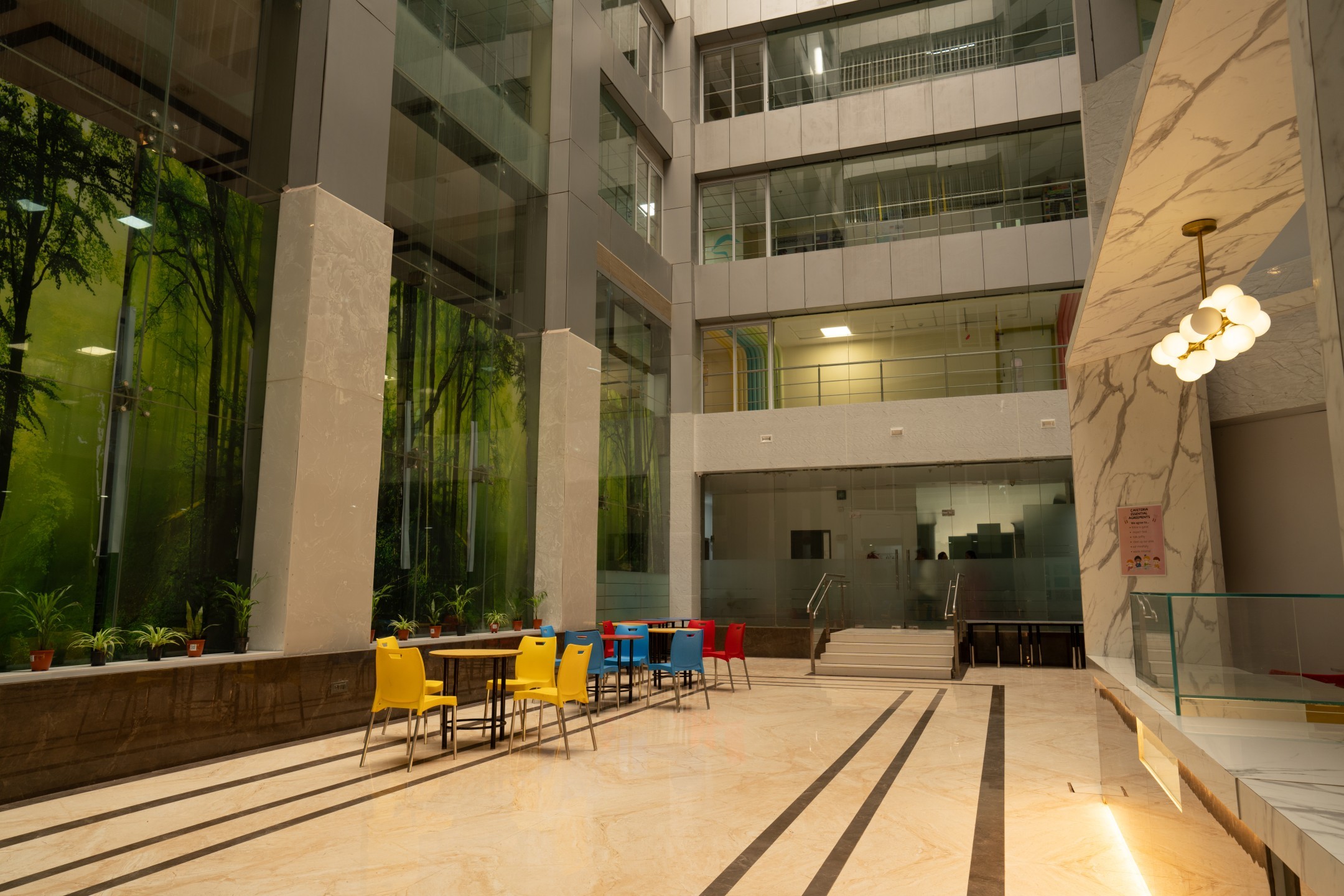
Please fill the Enquiry form and our admissions team will get in touch with you.
To schedule a visit to our NESISM School Campus in Mumbai.


.png)